Introduction
In the automotive second-hand market, trust is the primary currency. Buyers need to know if a vehicle has been accurately inspected, while inspectors need a way to prove their reports haven't been tampered with.
As part of Sumbu Labs, I worked as a Backend Developer to solve this problem for PT. Inspeksi Mobil Jogja. We built CAR-dano, a decentralized platform that turns vehicle inspection reports into immutable assets on the Cardano blockchain. This project was initiated by Giga and the PT Inspeksi team through a successful Project Catalyst Fund 13 proposal in late 2024.
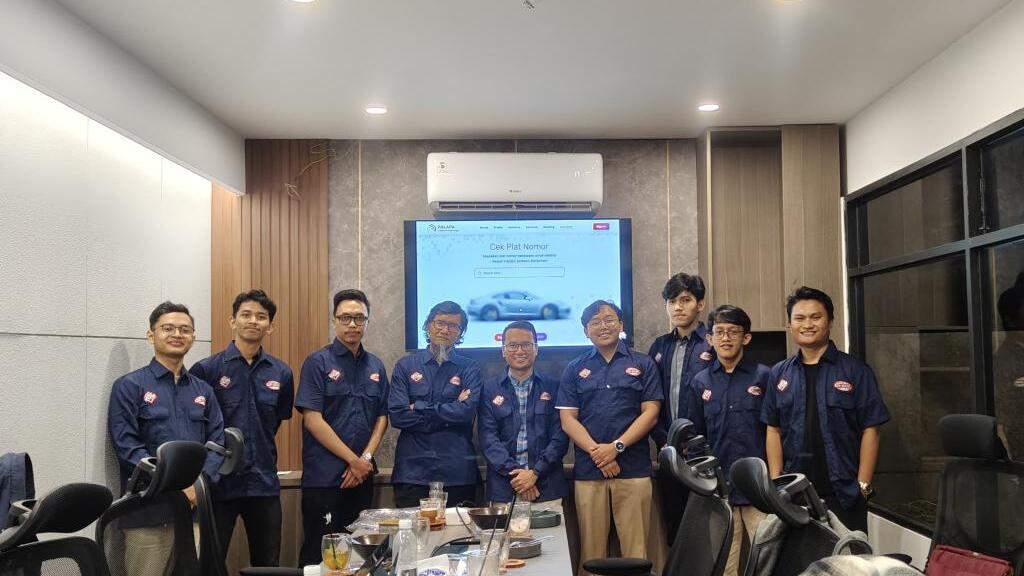
Under the academic supervision of Ir. Noor Akhmad Setiawan, S.T., M.T., Ph.D., IPM. and Guntur Dharma Putra, S.T., M.Sc., Ph.D., our team developed a robust bridge between traditional Web2 mobile applications and the Web3 ecosystem.
The Engineering Challenge: Web2 Reliability meets Web3 Finality
Bringing blockchain to a real-world inspection business isn't just about writing smart contracts; it's about building a backend that survives the "chaos" of distributed systems. We faced three core engineering hurdles:
- eUTXO State Management: Unlike Account-based chains (like Ethereum), Cardano uses the eUTXO (Extended Unspent Transaction Output) model. We had to manage UTXO state manually to prevent "UTXO contention" when multiple transactions attempted to spend the same inputs or collateral simultaneously.
- Strict Metadata Constraints: On-chain metadata (CIP-25) is limited to 64 bytes per string value. Truncating or splitting hashes without losing data integrity was a non-negotiable requirement.
- Service Reliability: The system depends on multiple external services (Blockfrost API, IPFS, and Puppeteer for PDF generation). A failure in any of these during a minting operation could result in data loss or "ghost" transactions.
🏗️ The System Architecture
Our backend was built with NestJS, chosen for its modularity and scalability. The database layer utilized PostgreSQL with Prisma ORM for operational data, while Redis handled atomic counters (for unique inspection IDs like YOG-01052025-001) and caching.
🛠️ Technical Implementation Deep-Dive
1. The Concurrency Guard: SimpleMutex & BIP-32
To prevent eUTXO collisions, I implemented a SimpleMutex in the BlockchainService. This ensures that for each internal wallet—managed using BIP-32/CIP-0003 standards—transactions are built, signed, and submitted in a strict sequence.
2. The 64-Byte Metadata Puzzle
Cardano's metadata values cannot exceed 64 bytes. I developed a recursive sanitizer (pseudocode below) that optimizes URLs and ensures strict byte-limit compliance. Additionally, we prevented Asset ID Collisions by deriving Asset IDs from shortened hashes of the inspection data, ensuring uniqueness across the entire ledger.
3. Reliability through Queues & Circuit Breakers
We implemented custom PdfGenerationQueue and BlockchainMintingQueue. These queues use exponential backoff and circuit breakers. If Blockfrost or IPFS goes down, the system waits and retries without crashing the user's session, ensuring that every paid inspection eventually reaches the blockchain.
4. Smart Contracts with Aiken (Plutus V3)
We transitioned our validation logic to Aiken, a modern functional language for Cardano. Our smart contract (inspection_policy.mint) ensures that only authorized admin wallets can mint NFTs and that each NFT is uniquely tied to a specific inspection event.
The system uses the Aiken Blueprint (plutus.json), which represents the source code translated into Plutus Core. This allows the backend to work with the validator's hash without requiring the full source code at runtime.
💻 Under the Hood: The Algorithms
To ensure the logic is clear for researchers and other engineers, here are the core algorithms used in the CAR-dano backend.
1. Initialization Logic
The service initializes connection providers and the wallet using environment-specific keys.
ALGORITHM InitializeBlockchainService:
    1. READ 'BLOCKFROST_ENV' (preview/preprod/mainnet)
    2. INITIALIZE BlockfrostProvider with API Key
    3. INITIALIZE MeshWallet using Secret Key (ROOT/Bech32)
    4. ATTACH Blockfrost as both Fetcher and Submitter to the Wallet
    5. SET minUtxoLovelace (default: 2,000,000 lovelace / 2 ADA)
2. Metadata Sanitizer (The 64-byte Guard)
Cardano metadata values cannot exceed 64 bytes. The service recursively cleans all data.
ALGORITHM SanitizeMetadata:
    INPUT data: ANY

    IF data is STRING:
        IF byteLength(data) > 64:
            IF data is IPFS URL:
                REPLACE "https://ipfs.io/ipfs/" WITH "ipfs://"
            IF length STILL > 64:
                TRUNCATE to 64 bytes
    ELSE IF data is OBJECT or ARRAY:
        RECURSIVELY apply SanitizeMetadata to all children
    RETURN cleaned data
3. Core Minting Algorithm
This is the logic executed inside our BlockchainMintingQueue to ensure every transaction is finalized correctly.
ALGORITHM MintInspectionNFT:
    INPUT metadata: InspectionNftMetadata

    1. ACQUIRE Mutex lock for the backend wallet address
    2. SANITIZE metadata (ensure 64-byte string limits)
    3. CALCULATE policyId using ForgeScript
    4. BUILD Transaction Payload:
        - Mint 1 token with policyId and assetName
        - Attach CIP-25 Metadata under label '721'
        - Select optimal UTXOs for fees
    5. SIGN and SUBMIT via Blockfrost
    6. IF Submission fails (e.g., Stale UTXO):
        - REBUILD with fresh UTXO selection
        - RETRY with Exponential Backoff
    7. RELEASE Mutex lock
4. The Aiken Minting Flow
Unlike standard minting, the Aiken integration uses UTXO-stapling for advanced security.
ALGORITHM BuildAikenMintTx:
    1. FETCH Admin's UTXOs from Blockfrost
    2. SELECT 'Reference UTXO' to parameterize the policy
    3. PARAMETERIZE Aiken Script with Reference UTXO hash
    4. CONSTRUCT Redeemer (Aiken 'v3' redeemer)
    5. BUILD Unsigned Transaction using PlutusScriptV3
    6. RETURN CBOR to be signed by the Authorized Admin
🔄 The Data Integrity Lifecycle
- Submission: Inspector uploads data from the field.
- PDF Generation: Puppeteer renders a high-fidelity report.
- Hashing: We calculate the SHA-256 fingerprint of the PDF. This hash serves as the "Fingerprint" of the record.
- IPFS Pinning: The PDF is stored permanently on IPFS, returning a CID.
- Metadata Mapping: The PDF hash and CID are mapped to a CIP-25 NFT metadata object.
- Cardano Minting: Using the MeshJS SDK, we build a transaction that mints a unique NFT on Cardano.
- Immutability: Once the transaction is confirmed on the Cardano blockchain, the record is immutable. Any attempt to alter the PDF would result in a hash mismatch, and the NFT serves as the permanent certificate of authenticity.
The Team Behind Sumbu Labs
This project was a true collaborative effort by the Sumbu Labs team:
- Giga Hidjrika Aura Adkhy (Project Manager/Initiator)
- Dzikran Azka Sajidan (Mobile Developer)
- Farhan Franaka (Frontend Developer)
- Maulana Anjari Anggorokasih (Backend Developer)
- Azfar Azdi Arfakhsyad (UI/UX Designer)
Links & Resources
- GitHub Organization: github.com/CAR-dano
- Backend Repository: CAR-dano/cardano-backend
- Official Website: sumbu.xyz
- Partner: inspeksimobil.id
Impact and Lessons Learned
Integrating Web2 standards with Web3 finality taught me that reliability is the hardest part of blockchain engineering. By building a system that handles state management and service failure gracefully, we provided PT. Inspeksi Mobil Jogja with a truly tamper-proof digital archive.
This project proves that the future of automotive trust isn't just in the engine—it's in the ledger.
Learn more about our Project Catalyst proposal at projectcatalyst.io.